dArtagnan
About dArtagnan
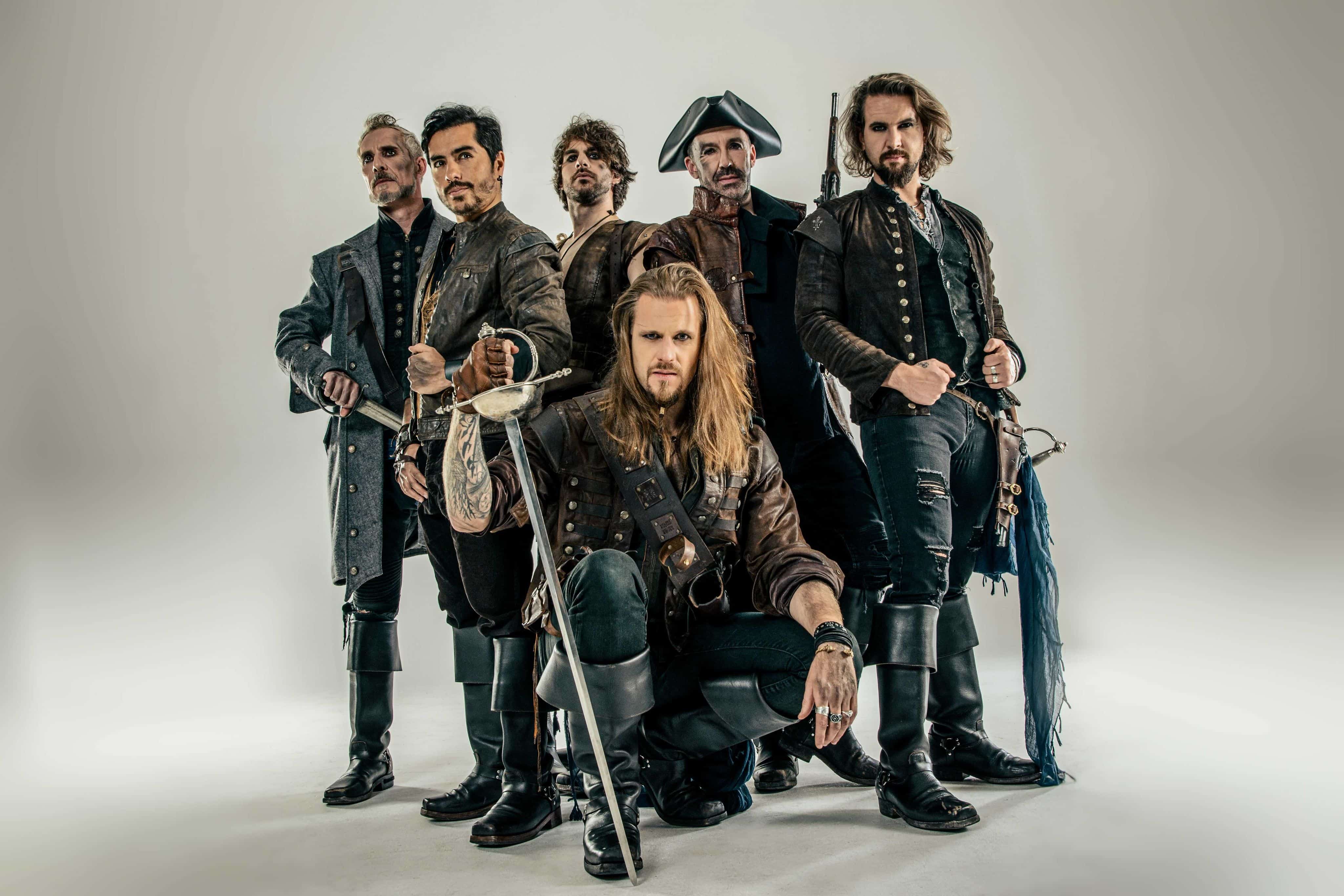
The folk rockers dArtagnan have struck gold with “Herzblut.” The Franconians' sixth studio album is a treasure chest brimming with hits, glittering with enticing musical precious metal. Every ballad, anthem, dance tune, and headbanger on it proves to be a diamond.
The way the Nuremberg band delivers one catchy tune after another on “Herzblut” makes writing hits seem like the easiest thing in the world. But in reality, it is a high art, and many dream ships have been wrecked on its cliffs.
How does dArtagnan manage to navigate all the musical shoals so successfully? On the one hand, through years of experience. Although the group was only founded in 2015, by that time band leader, singer, and multi-instrumentalist Ben Metzner had long since earned his spurs with the chart-toppers Feuerschwanz. No school teaches what makes a good song better than extensive live performances at festivals and on tours – which have taken Ben and his comrades from clubs to often sold-out halls and now even occasionally to arenas.
This is accompanied by a high level of craftsmanship that sets dArtagnan apart—both on stage and in the rehearsal room and studio. The Franconians have achieved a perfect balance between electric instruments and acoustics, with bouzouki, devil's fiddle, tin whistle, and the queen of bagpipes, the uilleann pipes, all used to great effect.
Equally important are their clever lyrical contents. Of course, dArtagnan play joyfully for dancing, and their songs always invite celebration. But without didactic undertones or finger-wagging, the South Germans also offer a journey into the age of the musketeers. Their cosmopolitan outlook extends far beyond the boundaries of Alexandre Dumas' novel “The Three Musketeers,” which has been filmed several times.
On “Herzblut,” dArtagnan pay a lively visit to the Breton “King of Corsairs,” Robert Surcouf, and with the epic “Mosqueteros,” Spanish musketeers are put in the spotlight for the first time. The latter song features Rafa Blas, the newly minted singer of Spanish metal legends Mägo de Oz—one of the traditionally exciting guest appearances on the new album. For example, the hard-rocking title track “Herzblut,” with lyrics based on Johann Wolfgang von Goethe's poem “Was wird mir jede Stunde so bang?” (What makes me so anxious every hour?), features the beautiful mezzo-soprano voice of Ad Infinitum frontwoman Melissa Bonny.
Of course, true crowd favorites are also a must on “Herzblut”: “Klingen Kreuzen” and “Rollt rein” are guaranteed to get the cups clinking, and not just among the cloak-and-dagger crowd. “Rosenrot” and, despite its title, “Freudenhaus” can be understood as a gallant bow to the ladies, subtly questioning masculine manners and behavior in their undertones. “Coeur de la mer,” on the other hand, reveals another musical influence on “Herzblut” when listened to closely: the cinematic character of many songs is no coincidence, as Die Franken have been audibly inspired by such giants of film music as Ennio Morricone and Hans Zimmer.
On “Herzblut,” dArtagnan once again have their fingers in many pies and feel just as at home at medieval festivals as they do at Wacken Open Air. It is probably this openness that gives the album its tremendous hit potential. With “Herzblut,” dArtagnan seize their hard-won musical freedom with both hands and, united, lift a sparkling treasure!
Lineup A-Z
- A Day To Remember ·
- All Them Witches ·
- All Time Low ·
- Alter Bridge ·
- A New Chapter ·
- ANKOR ·
- Annisokay ·
- A Perfect Circle ·
- Architects ·
- Aurorawave ·
- Badflower ·
- Bad Nerves ·
- Bad Omens ·
- Bilmuri ·
- Black Label Society ·
- Black Veil Brides ·
- Breaking Benjamin ·
- Bring Me The Horizon ·
- Cassies ·
- Catch Your Breath ·
- Chuggaboom ·
- dArtagnan ·
- Drain ·
- Ego Kill Talent ·
- Feine Sahne Fischfilet ·
- Frevd ·
- Future Palace ·
- Hollywood Undead ·
- Ice Nine Kills ·
- Iron Maiden ·
- Just Mustard ·
- Kaleo ·
- Kanonenfieber ·
- KUBLAI KHAN TX ·
- Kupfergold ·
- Lagwagon ·
- Lemo ·
- Loathe ·
- Madsen ·
- Magnolia Park ·
- Malevolence ·
- Mastodon ·
- Melrose Avenue ·
- Nickelsdorfer Böhmische ·
- P.O.D. ·
- Palaye Royale ·
- Papa Roach ·
- President ·
- Querbeat ·
- Quicksand ·
- Return to Dust ·
- Royal Republic ·
- Roy Bianco und die Abbrunzati Boys ·
- Sabaton ·
- Sepultura ·
- Sex Pistols feat. Frank Carter ·
- Six Feet Under ·
- Skindred ·
- Slay Squad ·
- Social Distortion ·
- Soul Asylum ·
- Static X ·
- The Cure ·
- The Funeral Portrait ·
- The Molotovs ·
- The Offspring ·
- THE PLOT IN YOU ·
- The Pretty Reckless ·
- The Pretty Wild ·
- The Rasmus ·
- Three Days Grace ·
- Thrown ·
- Tom Morello ·
- Trivium ·
- TX2 ·
- Vinegar Hill ·
- VOILÀ ·
- Volbeat ·
- We Came As Romans ·
- Yunger ·
- Zascha ·